The Possible Murder of William Jenkins Egerton (Bicester, 1882)
Location: Bicester, Oxfordshire, England
Year: 1882
This story was particularly interesting to research, as the potential victim was actually my 3 x great grandfather!
William Jenkins Egerton was born on 19th August 1837 in Bicester - the son of John & Mary Egerton (née Gibbons).
William - a carpenter by trade, who worked for the Grimsley family - married Jane Hancock in October 1855, and the couple went on to have several children. William and Jane were my 3 x great grandparents.
Sadly, William's life ended rather suddenly and unexpectedly on Sunday 15th January 1882; he was only 44 years of age.
An inquest was held at The Red Lion Hotel, Bicester, the following evening; however, what would've ordinarily been a fairly straightforward affair began to garner a lot of public interest, due to "various rumours as to the cause of death being afloat", in which "it was very plainly hinted that he had not died from any natural cause"!
The first witness called upon to testify was Helen Egerton - sister of the deceased. She deposed: "At about 6 o'clock on Saturday night, I was sent for to see the deceased, and I went to his house. When I arrived, I found him in bed, and he told me he had got a cold, and also complained of pains in his head. He said his shoes were bad, and that he'd given his wife (Jane) 15s to buy some new ones, which she had neglected to do so. He attributed his cold to the fact of his boots being in bad condition. I remained with him about an hour. He told me that he had taken nothing to relieve the cold, and asked me for camomile tea, which I brought to him. I had previously taken him some arrowroot and brandy, but he could not swallow it."
Helen continued to inform the jury that Jane Egerton had summoned her back to the house at around 1.30pm the following day (Sunday), and that she had realised that her brother was dying from the very moment she entered the room: "It was evident that he was dying, and was not conscious. I hadn't thought his condition bad enough to require it the previous day, but after seeing him again, I decided that the doctor ought to be called. Dr Drinkwater arrived, and sent me to fetch some linseed meal, but when I returned, my brother was dead."
Helen also mentioned that William had asked her to bring him some hot beer on Saturday evening, as he had apparently begged his wife for a cup of tea/some other form of liquid, but she had refused to bring any to him! William had also apparently admitted that his wife had refused to do the same on the Friday night, so he had gone downstairs to get a drink for himself, but had fallen over whilst doing so. His wife had only gone down to check on him after he'd fallen.
According to Helen: "He told me on the Saturday that he lived very unhappily with his wife, and that she had not done a good part by him, but he did not enter into the particulars. There are nine children, six of whom live at home. I believe that my brother has been in regular work (as a carpenter for Grimsley & Sons) for some time now, at approx. 24s a week. I am not aware that he had anything the matter with him for years. He also told me on Saturday night that his wife had misapplied money which he had given her for household purposes, she having used it paying fines incurred by their son John, who had been several times convicted by the magistrate. I believe they were frequently short of food, again caused by his wife's mismanagement."
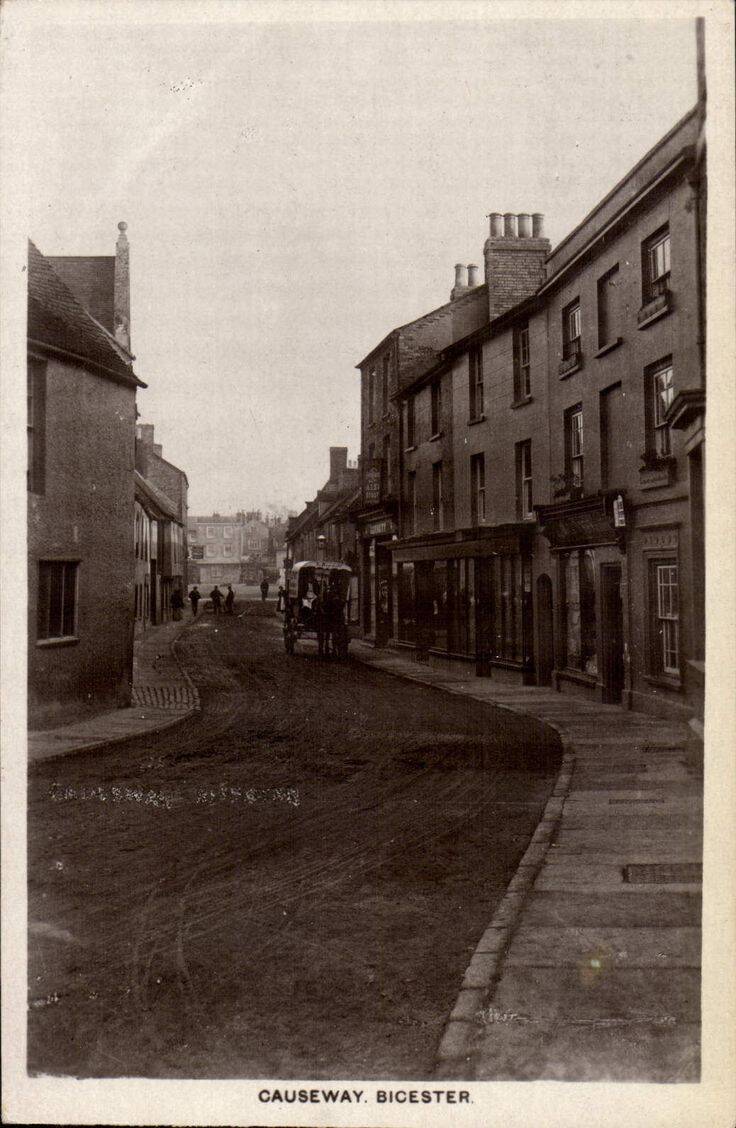
The next person to be called upon for evidence was a widowed neighbour called Eliza Berry, who had apparently given her testimony with great reluctance, as if she had something to hide: "I have lived next door to the deceased on The Causeway for about 2 years. He did not go to his work on Thursday last, and I believe he was in bed a greater part of the day. Between 2 and 3 o'clock in the afternoon he passed by my door, and went up to the yard (owned by Grimsleys). I saw him go up to the yard every day until Sunday. I spoke to him several times, and asked him how he was, and he said "very bad". On Sunday his wife fetched me into their house between 10 and 11 o'clock, and deceased was then sitting in his armchair downstairs, with his eyes closed. I looked at him for a few moments, he then opened his eyes, and when I asked him how he was, he replied "worse". I only remained in the house for a few minutes, and Mr Egerton went upstairs to bed just as I left. Between 1 and 2 o'clock, Mrs Egerton fetched me again, saying "come and look at my husband, he is making such a noise and I feel frightened". When I went upstairs, his eyes were closed, and he was evidently dying. He was lying on his back with only his face visible. I spoke to him but he did not answer. I said that I would send for a doctor, then promptly sent my daughter to fetch Dr Drinkwater. I do not believe that he lived more than 10 minutes afterwards. There was no one else in the room when he passed, except for his wife."
It transpired that William and Jane had been embroiled in a quarrel on the previous Wednesday night, regarding money; Jane apparently wanted him to draw some money from his employer to pay a fine for their son, but William had refused. They argued for some time, and eventually, William relented, giving his wife the sum of 5s.
Eliza Berry's daughter, Fanny Berry, was the next to give her version of events: "I have been present when unpleasantness has taken place between the deceased and his wife. Last Wednesday night, Mrs Egerton came into our house, ranting that if her husband did not give her 7s, she would poison him. My mother and sister were also present when this was said, and Mrs Egerton repeated the same thing at least twice more. She was in a great passion and a state of excitement when she said so. My mother told Mrs Egerton not to say such things, but Mrs Egerton said that she would if she wished. I have heard the Egertons threaten one another several times."
Several other neighbours confirmed that Jane Egerton often made threats against her husband, and that the couple quarrelled often.
The coroner told the jury that they needed to "consider whether there was sufficient evidence before them to justify in arriving at a verdict". He said that he personally felt that Dr Drinkwater's findings (which showed no obvious signs of poisoning) were good enough to exonerate Jane Egerton, and that hers was the only testimony that could be truly relied upon.
The jury returned a verdict of 'death by natural causes', and William Jenkins Egerton was buried on Tuesday 17th January, with his coffin being carried to his final resting place by six of his fellow workmen.
According to Dr Drinkwater, the post-mortem had showed that William's lungs were congested, and his liver was much enlarged. There was nothing, in his view, that indicated foul play, although he did agree that had Mr Egerton not been so badly neglected by his wife, he may have survived his illness.
Eliza and Fanny Berry were given a rather stern telling-off, as they were accused of "throwing dust into the eyes of the jury"... Although the newspaper articles don't explicitly state why, aside from the fact that the pair appeared nervous/reluctant to speak (understandable, considering the fact that they were testifying in front of a room full of people, and were forced to face Jane Egerton as they did so!).
The coroner said the following to William's widow: "You did not treat the deceased in the manner you ought to have done. You neglected him in many ways when he ought to have had proper treatment. The jury believe the deceased had died from the cold, and also from neglect."
Jane apparently shrugged this off, remarking: "If he were neglected, then it were his own fault"! She had reportedly seemed very disinterested and not at all distressed throughout the proceedings, which undoubtedly only added fuel to the fire where the rumours were concerned!
My thoughts? Well, the fact that William's liver was significantly larger than it ought to have been doesn't sit right with me; this is a symptom of poisoning, as are head pains! There were also plenty of substances available to freely buy/scavenge in the 1880's, some of which wouldn't necessarily show any obvious signs during a post-mortem, unless toxicology tests were carried out (as in the modern day). I personally feel as if it would've been relatively easy for subtle signs to have been overlooked, especially as the witnesses weren't taken particularly seriously!
Did Jane murder her husband? We will never know for sure. But it is definitely safe to say that, if nothing else, she contributed towards his demise! And she certainly wasn't that unhappy about it, either! Another tiny snippet in the newspapers mentioned that William's life had been insured... And that Jane swiftly collected what was owed to her after his burial!
Another potentially damning piece of information was found a few years earlier, mentioning how Jane had nursed a neighbour back to health with the aid of natural remedies... If she knew which herbs/plants etc. could be used to cure an illness, she must have surely known which ones could prove deadly/have the opposite effect!
(The image below shows The Causeway, Bicester, printed on a postcard by a local store called Paragreen's. Courtesy of Pinterest).
Create Your Own Website With Webador